
Jaboticaba journal
Where Rare Eugenia Fruits Grow: A Native Range Guide
Eugenia is a large myrtle genus, and a plant label that says only “Eugenia” says little about where that plant evolved. The species in our collection span coastal Brazil, the Amazon and Guianas, the Caribbean, and the southern part of South America. The map above highlights countries represented in the native ranges discussed here. It is a country-level reading aid, not a botanical range map.
A Rio de Janeiro coastal example
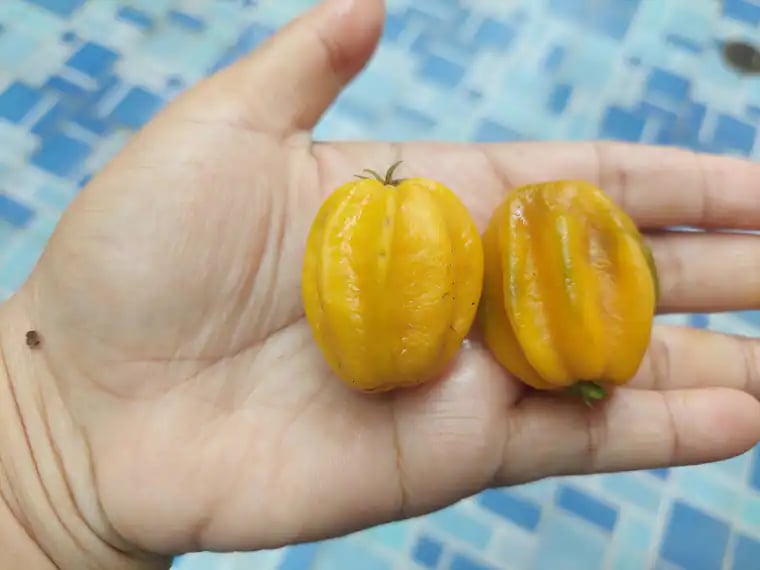
Pitangatuba is Eugenia selloi. Kew records its native range in Rio de Janeiro, Brazil. That is much narrower than the range of Surinam cherry, or Eugenia uniflora, which is native from eastern and southern Brazil into southern South America. A shared genus and familiar fruit names do not imply the same geographic range.
Northern tropical species
Eugenia cribrata is recorded from southeastern Colombia and Venezuela. Eugenia patrisii occurs across northern South America, including the Guianas and Amazonian countries. Eugenia punicifolia reaches from the Caribbean into tropical South America. These examples make it especially important to check the species name before borrowing cultivation advice from a different Eugenia.
Species of the south
Cherry of the Rio Grande occurs from Bolivia through Brazil to Uruguay and neighboring countries. Uvaia also spans Bolivia, Brazil and northeastern Argentina. Eugenia uruguayensis is native to Brazil, Paraguay, Uruguay and northeastern Argentina. A country name is only a starting point: conditions vary greatly within each country.
How to read an origin label
- Look for a verified scientific name; common names can cover different plants.
- Distinguish a species’ native range from where a nursery grew a particular plant.
- Use the cited taxon record for the distribution, and record your own garden’s conditions separately.
- Treat country shading as context; it does not locate an individual population or prove a plant grows throughout a country.
Browse the Eugenia species profiles for photographs, source links and individual origin maps. Distribution sources: E. cribrata, E. patrisii, E. punicifolia, E. involucrata, E. pyriformis and E. uruguayensis at Royal Botanic Gardens, Kew.