
Jaboticaba journal
Pitanga and Pitangatuba: Similar Names, Different Origins
Pitanga and pitangatuba sound related because both are Eugenia fruits, but they are different species. The map above shows countries discussed in their native ranges; it does not claim that both plants occur across every highlighted country.
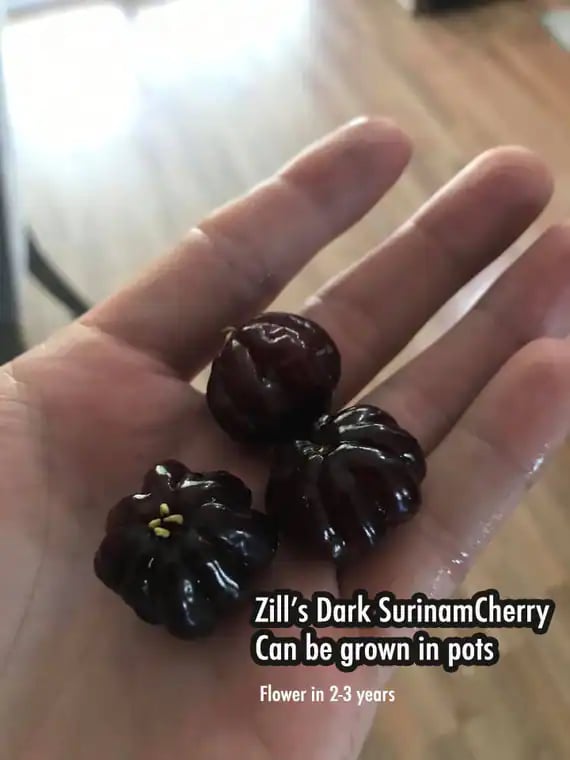
Pitanga is Eugenia uniflora
Eugenia uniflora is the Surinam cherry or pitanga. Kew places its native range from eastern and southern Brazil to southern South America. Our library shows two separately labeled selections: Zill’s Dark and Red Pitanga (Sweet). Those selection labels describe the plants in the collection; Kew’s range describes the species. A seedling from a selected fruit should not automatically be given the parent selection’s name.
Pitangatuba is Eugenia selloi
Eugenia selloi is called pitangatuba. Kew records a much narrower native range in Rio de Janeiro, Brazil, and lists Eugenia neonitida among its synonyms. The pitangatuba profile includes collection photos. It is useful to check both the accepted name and any older label when comparing nursery plants or searching botanical references.
Use the name before using a care claim
A nursery label may say “pitanga” while a grower’s notes refer to pitangatuba. Before applying a recommendation about cold, soil or time to fruit, ask which scientific name the source studied and whether it describes seedling or grafted material. Neither species’ geographic range supplies a universal temperature threshold for every garden.
- Record the complete name and any selection or cultivar label.
- Compare fruit and leaf photos only as supporting evidence; photographs alone may not settle identification.
- Save the seller’s plant provenance and your own flowering and fruiting dates.
- For an uncertain plant, keep the label provisional until it can be checked.
Taxonomy and distribution: Royal Botanic Gardens, Kew records for E. uniflora and E. selloi.